Tummy Time: The Complete Guide for New Parents
Tummy time is one of the most important activities you can do with your baby from day one. This guide covers everything you need to know — when to start, how long, what to do if your baby protests, and age-appropriate activities that make tummy time fun for both of you.
What Is Tummy Time?
Tummy time is simply the practice of placing your baby on their stomach while they are awake and you are supervising them. It sounds basic, but this simple position is one of the most developmentally powerful activities your baby can do in their first year of life.
When babies lie on their tummies, they have to work against gravity. This effort activates muscles in the neck, shoulders, back, and core that don't get much of a workout when baby is lying on their back or being held upright. Over time, this builds the foundational strength needed for every major motor milestone — from holding their head up and rolling over to sitting, crawling, and eventually walking.
The American Academy of Pediatrics (AAP) recommends tummy time as an essential daily activity for all healthy infants. Since the "Back to Sleep" campaign in the 1990s dramatically reduced SIDS rates by encouraging babies to sleep on their backs, tummy time during waking hours has become even more important to ensure babies still get the prone positioning they need for healthy development.
When to Start Tummy Time
You can start tummy time from your baby's very first day home from the hospital. In fact, the earlier you start, the more natural it will feel for your baby. Many pediatricians and physical therapists encourage beginning with skin-to-skin tummy time on a parent's chest within the first few days of life.
Newborns are naturally curled in a flexed position, and being on their tummy on your chest mimics the comfort of being held close. This gentle introduction helps your baby associate the position with warmth and security before progressing to tummy time on a flat surface.
Starting tummy time after the umbilical cord falls off
Some parents wonder whether they need to wait until the umbilical cord stump falls off. The short answer is no — chest-to-chest tummy time is perfectly safe right away. Once the stump has fallen off (usually within 1-3 weeks), many parents feel more comfortable doing tummy time on the floor as well.
Start tummy time when your baby is alert and content — not when they're hungry, tired, or just after a feed. A calm, playful mood makes all the difference.
How Long Should Tummy Time Be?
The most common question new parents ask is "how long should tummy time be?" The answer changes as your baby grows. The key principle is to start small and build gradually. Short, frequent sessions are always better than one long, miserable stretch.
Tummy time duration by age
- Newborn (0-2 weeks): 1-2 minutes per session, 2-3 times per day. Chest-to-chest counts.
- 1 month: 3-5 minutes per session, 3-4 times per day. Aim for a total of 10-15 minutes daily.
- 2 months: 5-10 minutes per session, 3-4 times per day. Total goal of 20-30 minutes.
- 3-4 months: 10-20 minutes per session. Most babies are comfortable for longer stretches now. Aim for 40-60 minutes total daily.
- 5-6 months: 15-30 minutes per session. Baby should be getting about 60 minutes or more of total tummy time throughout the day.
- 7-12 months: By this age, most babies are spending plenty of time on their tummies naturally as they learn to crawl, scoot, and explore. Structured tummy time sessions become less necessary as baby starts moving independently.
Remember, these are guidelines, not rules. Every baby develops at their own pace. The most important thing is consistency — a little bit of tummy time every day matters more than hitting an exact number of minutes.
Benefits of Tummy Time
Tummy time is about so much more than just building strong neck muscles. Research shows it supports nearly every area of your baby's physical and cognitive development. Here's why it matters:
1. Builds neck and upper body strength
When your baby lifts their head during tummy time, they're strengthening the neck, shoulder, and upper back muscles needed for head control — the foundation for all later motor skills.
2. Develops core stability
The abdominal and back muscles work hard during tummy time, building the core strength essential for sitting, crawling, and standing.
3. Promotes motor milestones
Babies who get regular tummy time tend to reach motor milestones like rolling, sitting, and crawling on schedule. A 2020 study published in Pediatrics found that babies who had more tummy time achieved motor milestones earlier than those who had less.
4. Prevents flat head syndrome (plagiocephaly)
Spending too much time on their back can cause the soft bones of a baby's skull to flatten. Regular tummy time takes pressure off the back of the head and promotes a rounder head shape.
5. Supports visual development
Tummy time gives babies a different visual perspective of the world. Lifting the head and tracking objects strengthens eye muscles and develops visual tracking skills.
6. Encourages sensory exploration
Different textures under baby's hands, new visual angles, and the physical sensations of being on their tummy all contribute to sensory development.

7. Supports hand-eye coordination
As babies reach for toys during tummy time, they practice coordinating what they see with what their hands do — a critical skill for feeding, grasping, and eventually writing.
8. Builds a foundation for crawling
Tummy time teaches babies to push up on their arms, shift their weight, and eventually coordinate arm and leg movements for crawling.
What to Do If Your Baby Hates Tummy Time
Let's be honest: many babies do not love tummy time at first. If your baby cries or fusses during tummy time, you're not doing anything wrong, and your baby is completely normal. Here's why it happens and what you can do about it.
Why do babies dislike tummy time?
Being on their tummy is hard work for a newborn. They lack the muscle strength to lift their heavy head comfortably, and the position feels unfamiliar. It's the equivalent of an adult doing a plank for the first time — uncomfortable but incredibly beneficial. Some babies also don't like the reduced visual field when their face is close to the floor.
Strategies for a baby who hates tummy time
- Start on your body. Chest-to-chest tummy time is much more tolerable because baby can see and smell you. Recline slightly so baby has to do a little work lifting their head.
- Keep it short. Even one minute counts. Do many short sessions throughout the day rather than forcing a long one.
- Get down at eye level. Lie on the floor face-to-face with your baby. Sing, talk, and make silly faces. Your face is your baby's favorite thing to look at.
- Use a rolled towel or nursing pillow. Place a small rolled-up towel or a Boppy pillow under your baby's chest and armpits. This slight elevation makes it easier to lift the head and reduces frustration.
- Try a different surface. Some babies prefer a soft blanket, while others do better on a firmer play mat. Experiment to see what your baby likes.
- Time it right. Attempt tummy time when baby is alert and happy — not hungry, not right after a meal, and not sleepy. After a diaper change is often a good time.
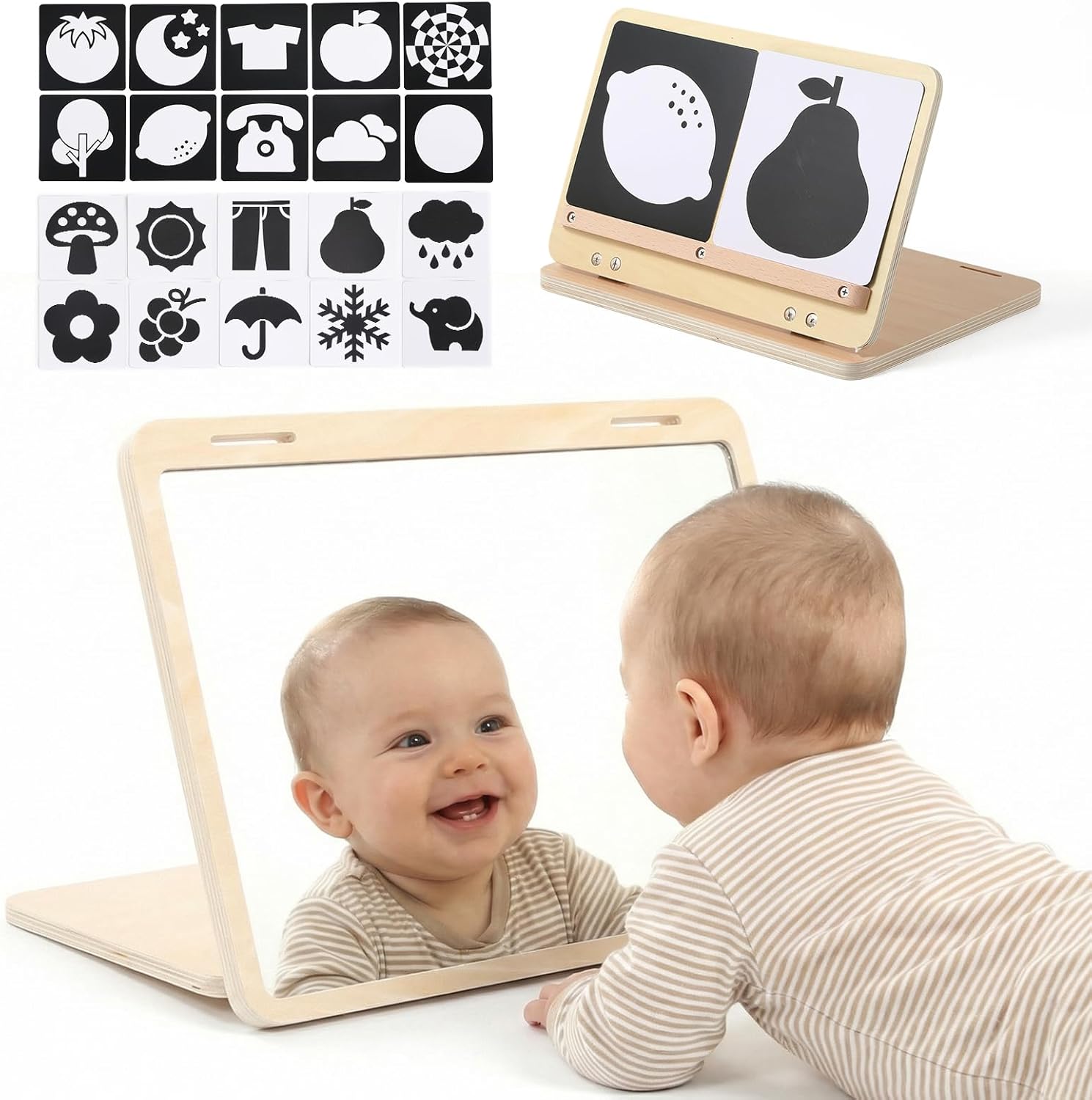
- Use interesting toys. High-contrast cards, rattles, or a small mirror placed at eye level can capture baby's attention and extend tummy time sessions.
- Try different positions. Tummy time doesn't have to be on the floor. Across your lap, on a therapy ball, or even during babywearing (when done safely) all count as prone positioning.
A little fussing is OK — it means baby is working hard. But if your baby is genuinely distressed, pick them up, comfort them, and try again later. Tummy time should never be a negative experience. Consistency matters more than duration.
Tummy Time Positions to Try
One of the best ways to make tummy time enjoyable is to vary the positions. Here are five tried-and-true tummy time positions that most babies enjoy.
Chest-to-chest
Lie back on a couch or bed and place your baby on your chest, tummy to tummy. This is perfect for newborns and gives baby the comfort of hearing your heartbeat and feeling your warmth while still getting the benefits of prone positioning.
Across your lap
Sit on a chair or the floor and drape baby across your lap, tummy down. You can gently rock your legs or pat their back. This position is also wonderful for relieving gas.
Classic floor time
Place baby on a firm, flat surface like a play mat or blanket on the floor. Place interesting toys or high-contrast cards within their line of sight. Get down on the floor at baby's level to encourage them.
Pillow prop
Place a nursing pillow (like a Boppy) or a small rolled-up towel under baby's chest with their arms draped over it. This slight elevation makes it easier for baby to lift their head and reduces frustration.
Tummy-down carry
Hold baby face-down along your forearm like a football, with their head near your elbow and your hand supporting between their legs. You can walk around the house this way, and many babies find this position very soothing.
Tummy Time Activities by Age
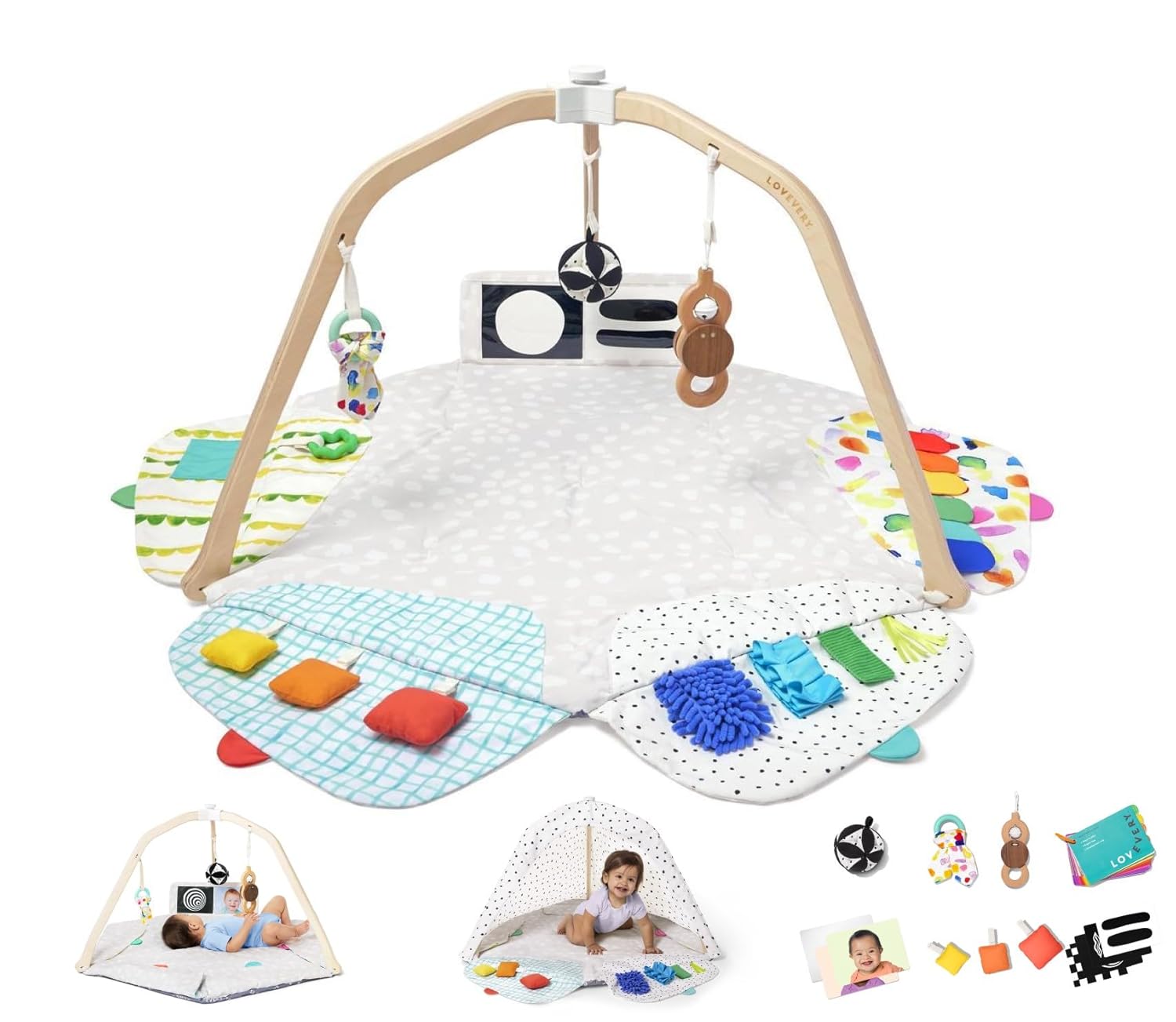
The right activity can transform tummy time from something your baby endures to something they enjoy. Here are age-appropriate tummy time activities to keep things engaging.
Newborn to 2 months
- Face time: Get down on the floor and position your face 8-12 inches from baby's. Smile, talk, and sing. Your face is the most engaging "toy" at this age.
- High-contrast cards: Place black-and-white pattern cards propped up where baby can see them. Newborns can only see about 8-12 inches and are drawn to bold, high-contrast images.
- Gentle touch: Stroke baby's back, arms, and legs during tummy time. The tactile input can help them relax into the position.
- Mirror play: Place a baby-safe mirror at floor level. Even very young babies are fascinated by faces — including their own.
3 to 4 months
- Toy reach: Place a favorite toy just beyond baby's reach to encourage them to stretch and shift their weight. This builds the arm and core strength needed for pre-crawling movements.
- Texture exploration: Let baby do tummy time on different textures — a soft blanket, a textured play mat, or even clean grass outdoors. This supports sensory development.
- Bubble watching: Blow bubbles slowly so they float past at baby's eye level. Tracking the bubbles strengthens eye muscles.
- Tummy time with a sibling or pet: Babies at this age are increasingly social and may be more motivated to lift their head to watch an older sibling play or a gentle family pet walk by.
5 to 6 months
- Airplane play: Lie on your back with knees bent, place baby on your shins (supporting them firmly), and gently lift your legs. Baby gets a tummy time workout while "flying." Always keep a firm grip.
- Pivot practice: Place toys in a circle around baby during tummy time. They'll start pivoting on their tummy to reach different toys, building rotational core strength.
- Water mat play: An inflatable tummy time water mat provides visual stimulation and a slightly cushioned surface that many babies enjoy.
- Roll the ball: Roll a small ball slowly toward and past baby to encourage head turning and tracking.
7 to 12 months
- Obstacle course: Create small "obstacles" with pillows and rolled blankets for baby to crawl over during tummy time. This builds problem-solving skills alongside physical strength.
- Tunnel play: Set up a play tunnel or drape a blanket over chairs for baby to crawl through.
- Push-up games: As baby gets stronger, they may start doing mini push-ups. Encourage this by placing toys on a slightly elevated surface.
- Music and movement: Play music during tummy time and watch baby start to bounce and move rhythmically.
Our app delivers 3 personalized, age-appropriate activities daily — many of them designed for tummy time. Each activity explains the developmental purpose and includes easy step-by-step instructions.
Tummy Time Safety Tips
Tummy time is very safe when done correctly. Follow these guidelines to ensure every session is both safe and productive:
- Always supervise. Never leave baby unattended during tummy time, not even for a moment. Babies can tire quickly and may not be able to lift their face out of the surface.
- Awake only. Tummy time is exclusively a supervised, awake activity. Babies must always sleep on their backs on a firm, flat surface. If baby falls asleep during tummy time, gently move them to their back.
- Use a firm, flat surface. The floor with a thin blanket or play mat is ideal. Avoid soft surfaces like beds, couches, or thick comforters where baby's face could sink in.
- Wait after feeding. Allow at least 20-30 minutes after a feed before doing tummy time on the floor. This reduces the chance of spitting up and general discomfort. (Chest-to-chest tummy time while upright is fine sooner.)
- Clear the area. Remove any loose blankets, pillows, stuffed animals, or small objects from the tummy time area. Keep the surface clear around baby's face.
- Watch for cues. If baby is arching their back, crying hard, or pressing their face into the surface, it's time for a break. Brief fussing is normal, but genuine distress means stop and try again later.
- Check with your pediatrician if your baby was premature, had a difficult birth, or has any medical conditions. They may have specific guidance on when and how to start tummy time.
As your baby approaches their first birthday and starts moving independently, formal tummy time sessions naturally transition into active floor play, crawling, and cruising. You can learn more about what to expect at each stage in our month-by-month milestone guide. And once your baby is settling into a daily rhythm, establishing a consistent bedtime routine can help support healthy sleep alongside all that active daytime play.
Frequently Asked Questions
Can I do tummy time if my baby still has the umbilical cord stump?
Yes. Chest-to-chest tummy time is fine from day one. For floor tummy time, most parents prefer to wait until the stump falls off (usually 1-3 weeks) simply for comfort, but it's not strictly necessary as long as the area stays clean and dry.
Does tummy time count if baby is in a carrier?
While babywearing is excellent for bonding and development, it doesn't replace tummy time because baby isn't working against gravity in the same way. Tummy time on a flat surface provides specific muscle-building opportunities that upright carrying doesn't fully replicate.
What if my baby falls asleep during tummy time?
Gently roll baby onto their back and place them in their safe sleep space. Always remember: back to sleep, tummy to play.
My baby can already roll over. Do they still need tummy time?
Yes, even babies who can roll benefit from time on their tummies. Once baby is rolling both ways, they'll naturally choose to spend time in prone position during play. You can continue encouraging tummy time with age-appropriate activities rather than formal sessions.
Is it normal for my baby to spit up during tummy time?
Some spit-up during tummy time is common, especially in younger babies. To minimize it, wait at least 20-30 minutes after feeding before starting tummy time on the floor. If excessive spit-up is a concern, talk to your pediatrician.
As an Amazon Associate, I earn from qualifying purchases. All products are personally curated and recommended.
Free Baby Activity Guide
Get 20 science-backed activities for your baby's first year, delivered to your inbox.
No spam, ever. Unsubscribe anytime.
Get Daily Tummy Time Activities
Little Play delivers 3 personalized, science-backed activities every day tailored to your baby's age. Free on iOS.