Do Babies Get Bored? The Signs and What to Do About It

30-second summary
- Yes, babies get bored, but it's understimulation, not adult-style boredom.
- Signs: alert-but-restless fussing that vanishes with a change of scene, object, or company.
- Short unstimulated stretches are healthy; that's when self-entertainment skills grow.
- The fix is usually a small change (new angle, new object, your narration), not a bigger show.
Your baby is fed, dry, rested, and whining at the ceiling like a tiny dissatisfied critic. Can a creature who just discovered their own feet actually be bored? Yes, in the way that matters: a baby's developing brain actively seeks input, and when the environment stops offering anything new to process, they let you know. The good news: baby boredom is the cheapest problem you'll ever solve.
What baby boredom looks like
- The instant-recovery fuss. Whining that stops the moment you walk in, pick a new object, or move them to another room. (Tiredness doesn't switch off like that.)
- Looking away from the same old thing. Habituation is real science: babies literally stop looking at what they've fully processed. A turned head can mean "next slide, please."
- Restless but alert. Squirming, arching, grabbing at nothing, with bright eyes and no sleepy cues.
- The escalation test. Bored fussing plateaus; hungry and tired fussing escalates. If it's getting louder fast, it's not boredom.
The case for a little boredom
Before you build an entertainment schedule: short, safe stretches of "nothing" are where babies practice their most underrated skill: occupying themselves. Studying hands, mouthing a muslin corner, watching light move on the wall: this is self-directed learning and the seed of independent play. The goal isn't zero boredom; it's a baby who experiences both engagement and unstructured time daily.
Small fixes first: the 30-second menu
Boredom rarely needs a production. In order of effort:
- Change the view. Same mat, different room. Window instead of wall. Floor instead of bouncer.
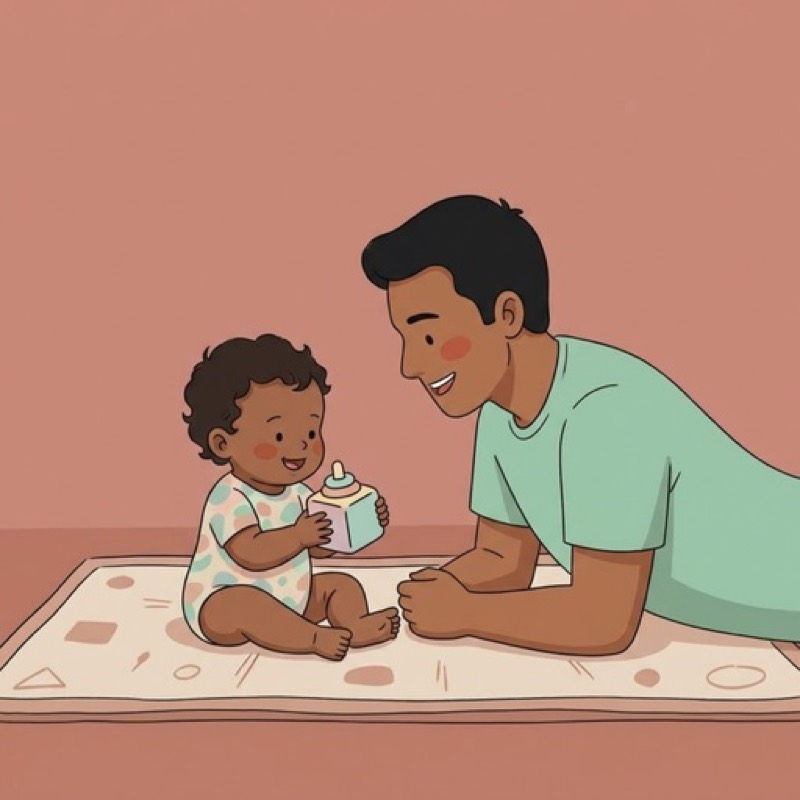
- Swap one object. Novelty works in single units; one new thing beats five.
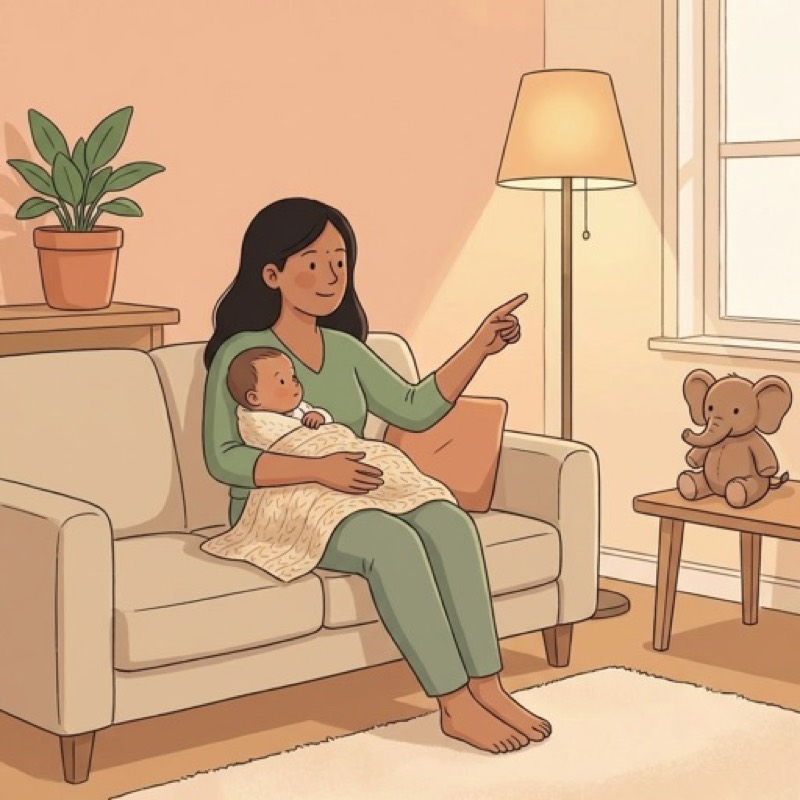
- Narrate your life. "Now I'm chopping the onion. It's making me cry. Onions are dramatic." Language input + entertainment, zero extra effort.
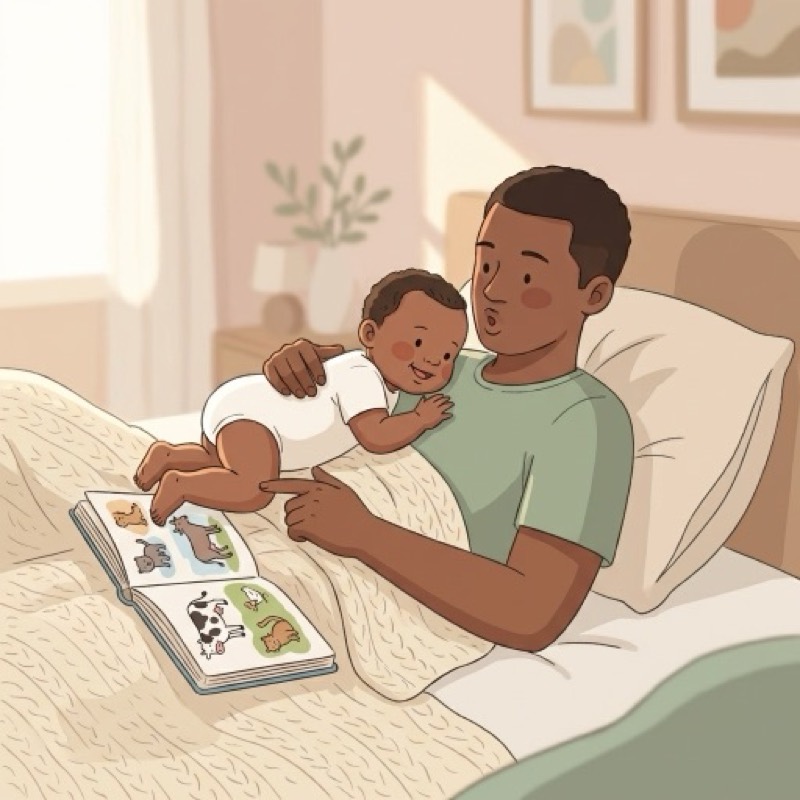
- Change their position. Sitting supported, side-lying, over your shoulder: a new posture is a new world.
And when you want a real activity

Rotate less stuff, more often
The counterintuitive setup that prevents most boredom: fewer things visible. A baby facing twelve toys skims; a baby facing three explores. Keep a small active set within reach, store the rest, and swap one or two items when attention fades, not on a schedule. You'll get deeper focus from less stuff, and every rotation day feels like a delivery arrived.
Never run out of ideas: the full library of 281 activities filters by your baby's exact age, or let the Little Play app hand you three fresh ones every morning.
Frequently asked questions
How can I tell boredom from tiredness?
A bored baby is alert but restless: fussing that stops the moment something interesting happens. A tired baby has heavy eyes, slower movements, and fussing that builds regardless of entertainment. When in doubt near nap time, assume tired.
Is it bad to let my baby be "bored" sometimes?
Short stretches of unstimulated time are actively good; that's when babies practice entertaining themselves, study their hands, and process the day. Boredom becomes a problem only when it's the default state for long stretches every day.
How often should I rotate toys and activities?
When interest fades, not on a calendar. A good rule: keep just a few objects within reach and swap one or two when they stop getting attention; novelty works best in small doses.
Never wonder what to play again
Little Play hands you three activities every morning, matched to your baby's exact week. Free on iOS, and all 281 activities are free to browse online.
Download Little PlayKeep reading
Free Baby Activity Guide
20 science-backed activities for the first year, straight to your inbox.
This article is for general information and isn't medical advice. Every baby develops on their own timeline; for concerns about your baby's development, sleep, or health, talk to your pediatrician.