Do High-Contrast Cards Actually Work? What Infant Vision Research Says
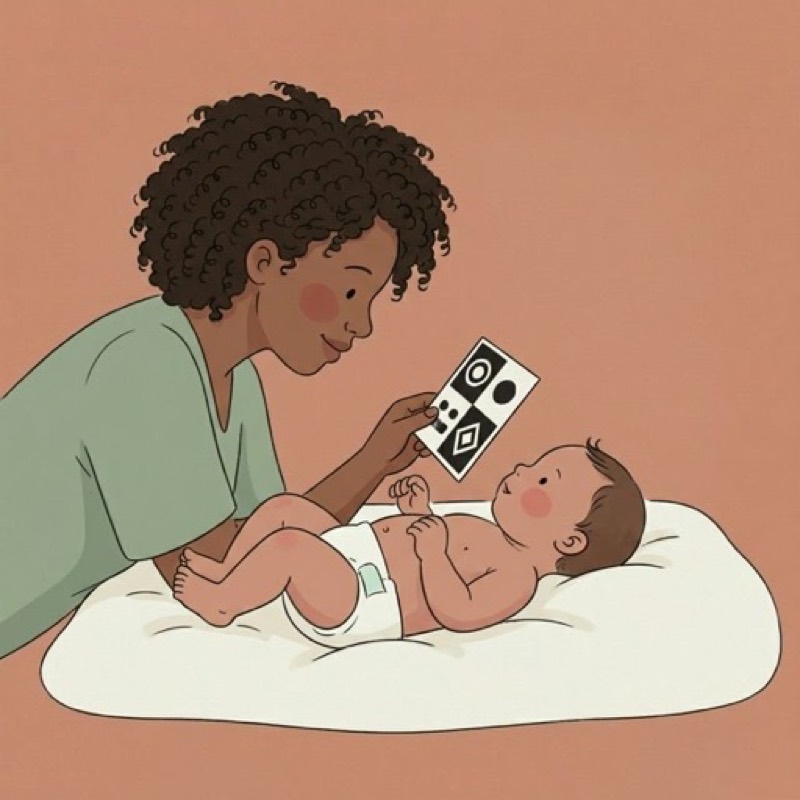
30-second summary
- Newborn vision is roughly 20/400, sees best at 8–12 inches, and detects contrast far better than color.
- High-contrast images genuinely hold newborn attention and give the visual system meaningful practice.
- They don't "make babies smarter"; no product does. They're good input, not magic.
- Most babies outgrow them around 3–4 months as color vision and face preference mature.
- A black marker and index cards work exactly as well as any boutique set.
They're in every registry guide and every "Montessori nursery" post: black-and-white cards, promising to supercharge your newborn's brain. The truth is more interesting than the marketing, and it comes with an expiry date nobody prints on the box.
What a newborn actually sees
At birth, vision is the least developed sense. Acuity is around 20/400, focus locks in at roughly 8–12 inches (not coincidentally, the distance to your face during feeding), and the color-sensing cone cells are still immature. What newborns detect well is edges and contrast: sharp boundaries between light and dark. A pastel bunny mural is fog; a bold black stripe on white is a billboard.
So do the cards work?
Yes, for the job they actually do. High-contrast patterns reliably capture and hold newborn attention, and sustained looking is real visual exercise: the brain's visual pathways are wiring themselves through use in these months. Attention practice, focus practice, tracking practice: that's the deliverable.
What the evidence does not support is anything grander. There's no research showing contrast cards produce smarter, faster-reading, or higher-achieving children. The honest claim is "developmentally appropriate visual input your newborn will actually engage with," which, in a world of overstimulating baby products, is plenty.
How to use them well
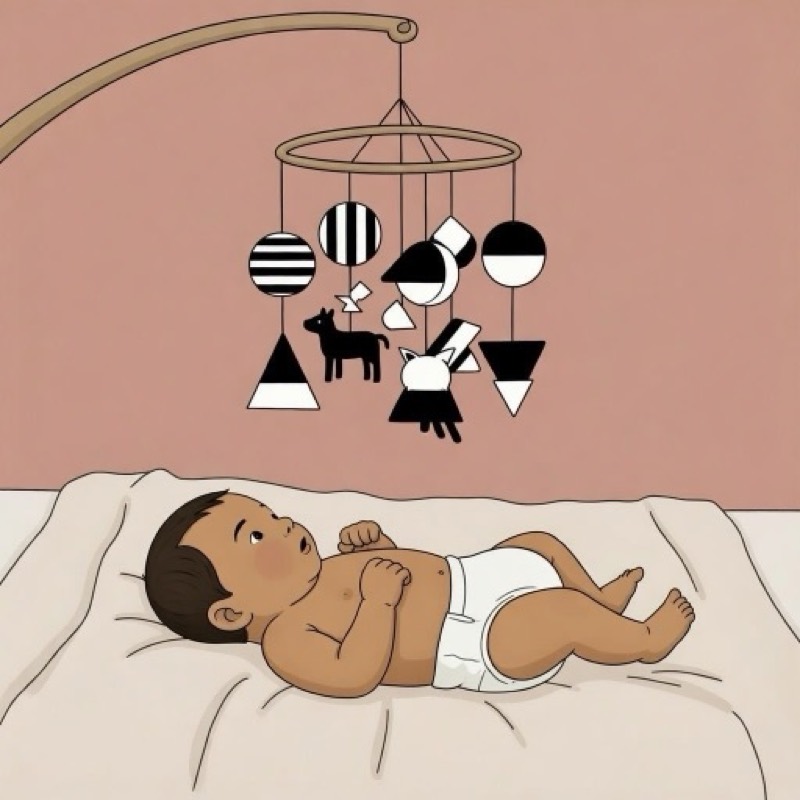
- One image at a time, held or propped 8–12 inches away, during calm-alert moments, and never to soothe crying.
- Let them lead. Staring hard is engagement; looking away is "session over." Thirty seconds counts.
- Prop them at tummy time. A contrast card at eye level is the best floor-time motivator this side of a mirror; see our tummy time alternatives guide.
When babies outgrow them (and what's next)
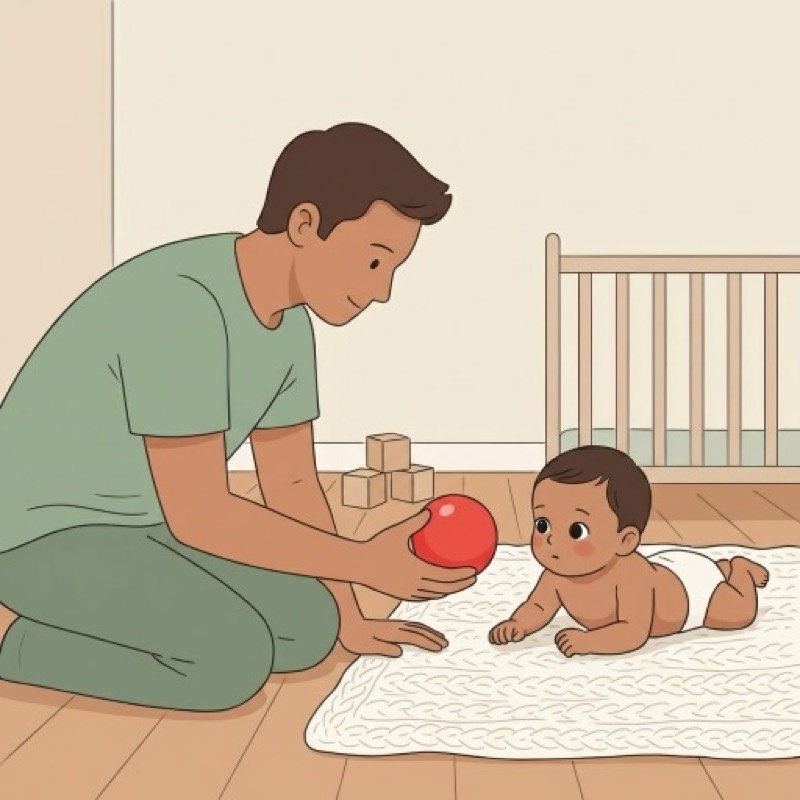
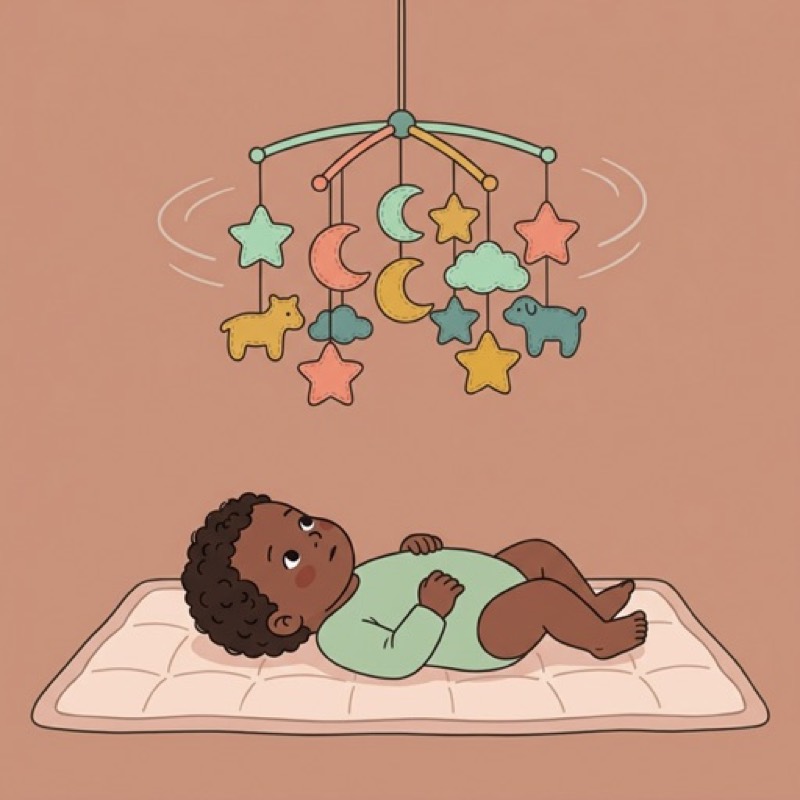
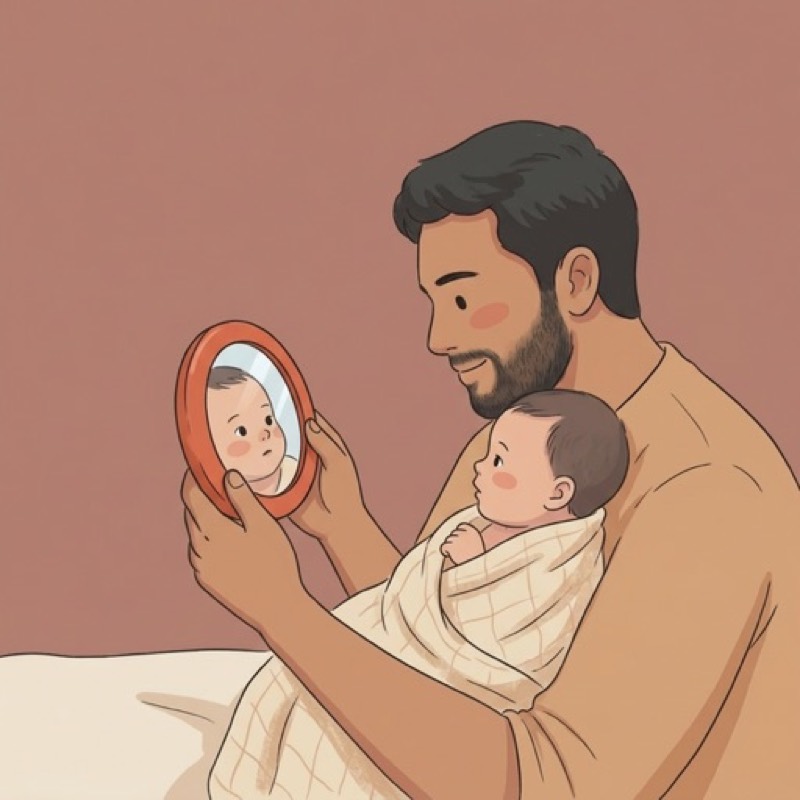
From around 2 months, color vision improves quickly; by 3–4 months, most babies clearly prefer faces, colors, and things that move, and the cards start losing the attention contest. That's not regression; that's graduation. The natural sequence:

The $0 version
Thick black marker, white index cards, ninety seconds: stripes, a checkerboard, a spiral, a simple face. Laminate with packing tape if you want drool-proofing. Commercial sets are lovely and this is identical to your baby's visual system. Spend the savings on nothing; you have a baby, you'll find something.
More visual development play, week by week: newborn activities · 1 month · 2 months · all cognitive activities.
Frequently asked questions
Do high-contrast cards make babies smarter?
No product makes a baby smarter. High-contrast images match what newborn vision can physically resolve, so they hold attention and give the visual system meaningful input to practice on. That's valuable, but your face at 8–12 inches does the same job with social bonus points.
When do babies outgrow high-contrast cards?
Color vision matures rapidly from around 2–3 months, and most babies begin preferring faces, colors, and moving objects by 3–4 months. That's the natural time to rotate to colorful objects, mirrors, and tracking games.
Do I need to buy cards, or can I make them?
A thick black marker and index cards work identically. Bold stripes, checkerboards, and simple faces are exactly what commercial sets print. Your baby cannot tell the difference. Genuinely.
Never wonder what to play again
Little Play hands you three activities every morning, matched to your baby's exact week. Free on iOS, and all 281 activities are free to browse online.
Download Little PlayKeep reading
Free Baby Activity Guide
20 science-backed activities for the first year, straight to your inbox.
This article is for general information and isn't medical advice. Every baby develops on their own timeline; for concerns about your baby's development, sleep, or health, talk to your pediatrician.